By Prakash Santhanam
Sustainability has rapidly evolved from key concern into a strategic priority for organisations, primarily driven by escalating climate risks, tightening regulatory frameworks, ever-evolving information technology, AI, and rising stakeholder expectations.
Economies such as Singapore, Japan, Australia, and Malaysia have introduced national sustainability roadmaps and ESG (Environmental, Social, and Governance) disclosure requirements, with organisations to incorporate sustainable considerations into strategies. Beyond policies and technologies, it has become increasingly evident that sustainability transformation is fundamentally driven by people, their behaviours, decisions, and culture at workplace.
In line with this, human capital is recognised as an essential factor in achieving and supporting sustaining objectives. Simple programs such as “no-print days,” energy-saving competitions, departmental sustainability pledges, and team-led waste reduction campaigns can significantly boost participation and awareness.
When HR provides structure, recognition, and clear communication, employees internalise sustainability as part of their daily routines. Cultural alignment proves as critical as strategic intent: employees engage meaningfully when they see leadership support and supported by solid channel to contribute.
Green Human Resource Management
With that, Green Human Resource Management (Green HRM) has emerged as a strategic framework that integrates environmental sustainability into HR policies, practices, and organisational culture. Organisations are embedding sustainability throughout the employee lifecycle covering recruitment, onboarding, performance management, training, and engagement.
Organisations adopt purpose-driven hiring strategies to attract candidates who demonstrate sustainability awareness and a commitment to responsible business practices. For example, incorporating sustainability-focused interview questions assessing candidates’ previous involvement in green initiatives, commitment to reducing environmental impact, and implement sustainable solutions is highly crucial.
A key initiative I led was transitioning the organisation toward a paperless workplace. Digitising HR processes such as onboarding, performance evaluations, learning modules, and internal communications significantly reduced paper usage while improving efficiency. HR engagement campaigns encouraged employees to use digital signatures, cloud collaboration tools, and automated HR workflows. Going paperless is not only a cost-saving measure but a sustainable commitment and inspiring participation in energy-saving challenges.
How is AI Transforming HR Practices?
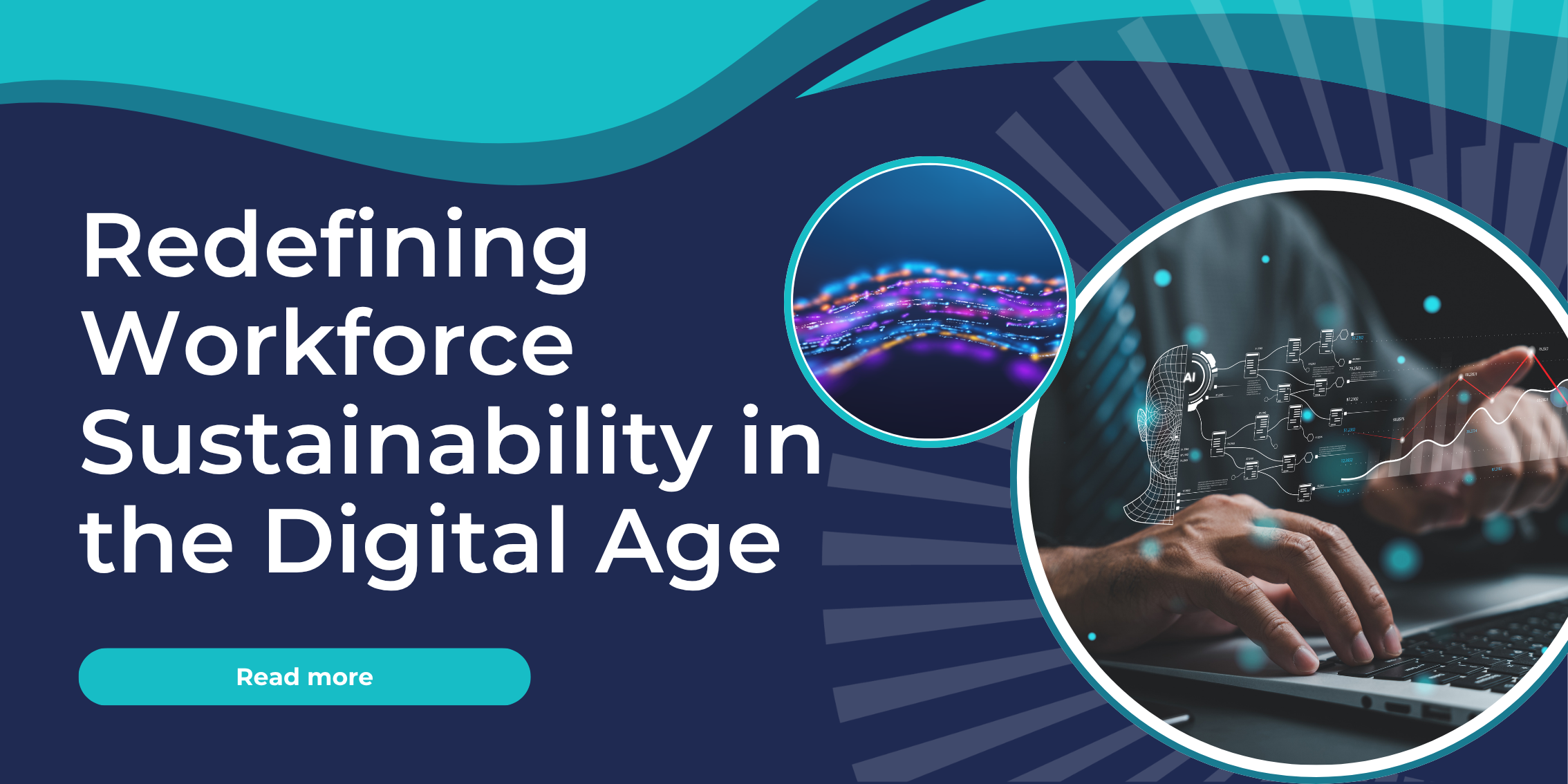
At the same time, Artificial Intelligence (AI) is transforming HR practices by enabling data-driven recruitment, HR operations and automation, personalised learning, and real-time performance management. AI-driven recruitment tools can assess candidates for both skills and alignment with sustainability values. AI-enabled screening streamlined hiring while prioritising cultural and environmental fit, enhancing workforce engagement and increasing the likelihood of sustaining long-term sustainability initiatives.
Integrating virtual reality (VR) and augmented reality (AR) significantly enhances user engagement and stimulates greater interest in learning by creating immersive, interactive, and experiential environments that go beyond traditional methods. VR immerses employees in real-world environmental scenarios, such as optimising energy usage or managing waste streams, while AR provides interactive guidance for efficient equipment use and resource conservation.
When combined as mixed reality (MR), these tools create a dynamic, firsthand experience where employees can visualise challenges and test solutions safely. I have personally introduced VR learning programs in my organizations for technical training programs, and it helps to introduce and incorporate technology into learning and can be a cost savvy effort.
Several AI-driven platforms also directly influence employee behaviour. Similarly, AI-enabled reminders reduce paper use, optimising virtual meetings, or switching off unused devices consistently drove behavioural change. Coupled with sustainability-linked incentives, these initiatives reinforce accountability and encourage employees to take ownership of sustainable outcomes.
AI supports smart workplace policies, including hybrid work optimisation, resource-efficient scheduling, and digital HR workflows. Combining remote and hybrid work arrangements with paperless systems and cloud collaboration tools not only improves flexibility and efficiency but also reduce commuting-related emissions and office energy use.
Strategically, integrating AI with Green HRM allows organisations to transition from compliance-focused sustainability to initiative-taking, data-driven strategies. It enables scaling initiatives across dispersed workforces, enhances decision-making with real-time insights, and fosters a culture of continuous improvement. Challenges remain, particularly regarding ethical AI usage, data privacy, and algorithmic transparency, which must be well-managed to ensure that technology aligns with sustainability goals.
In conclusion, the merging of AI and Green HRM represents a transformative pathway for sustainable organisational performance in the region. The most impactful sustainability initiatives are often simple going paperless, embedding green habits into daily routines, and leveraging immersive digital tools, when supported by AI, they become catalysts for change. The result is a workplace culture where sustainability is not merely a policy but a shared, lived responsibility of every employee, driving meaningful sustainable impact.
Interested in AI and eLearning?
AITD offers several courses on both AI and eLearning:
AI Essentials for L&D Professionals: Do you want to transform your L&D workflow and enhance learner experiences using Generative AI? In this blended learning course, you’ll learn how to use Generative (Gen) AI for a range of key L&D functions, including skills gap analysis, content creation, personalised learning and feedback. Register now.
eLearning: Foundations: This is Part I of an engaging, social learning suite of courses that provides you with access to learning experiences, activities and a comprehensive knowledge base. Register now. You may also be interested in eLearning: Planning and Design; and eLearning: Production and Delivery.
About the Author: Prakash Santhanam

Prakash Santhanam is a highly passionate talent management professional with over 10 years of global experience. He is certified in Situational Leadership, Meta NLP, CIPD, DDI, Adept-15, Insights, Hogan, and Harrison. Prakash serves as the Head of Talent and Learning for Bernas Group. He is a resourceful partner in driving organisations toward global excellence across the talent management cycle, including selection, hiring, development, engagement, retention and digitalisation. Throughout his career, he has served across diverse industries, including agriculture, telecommunications, education, automotive, IT, construction and insurance. He is actively involved in various professional associations, serving as a Fellow of Australia Institute of Training and Development (FAITD), a member of the Australia Human Resource Institute (AHRI) and former president of the International Association of Coaching (IAC) Malaysia.